
|

|

|
45
|
|
|
|
Agronomic characteristics of some hemp genotypes
Mediavilla, Vito, Paolo Bassetti, Marianne Leupin and Eric Mosimann 1999. Agronomic characteristics of some hemp genotypes. Journal of the International Hemp Association 6(2): 45, 48-53. In various field experiments carried out in Switzerland between 1993 and 1998, important agronomic characteristics of 29 hemp varieties were studied. These experiences allowed us to classify the maturation rates of each variety and the ratio of male to female plants in the population. The result of THC analyses confirmed those found in laboratories of other countries and the relevance of Swiss legislation. These varieties were tested with the aim of their utilisation for fibre, seed oil and essential oil.
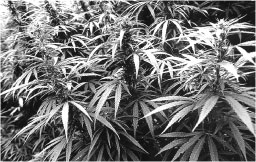
Figure 1. Hemp cultivars growing in Switzerland.
Introduction
It is assumed that the origin of hemp (Cannabis sativa L.) is central Asia. From there it spread to the East and to the West, where it was used by the Chinese, Greeks and Romans. In Europe, it was cultivated widely until the First World War as a fibre crop (Bòcsa and Karus 1997). Afterwards, the cultivation of hemp in most Central European countries almost disappeared, as it did in North America. Hemp fibre was not competitive compared with synthetic fibres. In addition, prohibitions made its cultivation difficult. Interest in this crop awoke about ten years ago for various reasons. Today, in numerous European and Asiatic countries, hemp is cultivated as a fibrous raw material. On the African continent, it is used predominantly for its medical and psychoactive properties. In Switzerland, the cultivation of hemp for drug production is forbidden. On the other hand, the use of hemp as raw materials (fibres, food or body-care) is permitted and even promoted.
Because all strains within the genus Cannabis intercross readily, it is today generally thought that Cannabis consists of only one species C. sativa L. Depending upon agronomic characteristics and cannabinoid content, hemp populations are divided into truly wild and naturalised populations, fibre land races, fibre cultivars, ornamental and drug strains. It is additionally assumed that most rural populations (so-called C. ruderalis, C. sativa ssp. ruderalis and C. sativa var. spontanea) descend from previously cultivated fibre crops. The fibre varieties available today descend from strains, last developed in the mid-20th Century in Germany, France, Italy, Hungary and the former Soviet Union. This material was selected particularly with the aim of a high fibre yield and non-psychoactivity (De Meijer 1995).
Historical reports show that in Switzerland in 1943, Hungarian, German and Italian cultivars ("Bolognese Hemp") were cultivated. There were apparently no Swiss varieties at that time (Anonymous 1943). In the 1990's, as hemp cultivation was reintroduced within Switzerland, cultivation of the "Genuine Swiss Farmer Hemp" or "Natural Hemp" was publicised (Bonin 1994, Rabara 1999). Such seed was sold at excessive prices, had a very low germinability and were a variety mixture, the so-called "Swissmix". Its Swiss origin is very doubtful, as there was no Swiss cultivation between 1950 and 1990, (1), and no Swiss germaplasm was ever recorded in a gene bank.
* Preliminary test without yield investigations |
Materials and Methods
From 1993 to 1998, field tests at several locations in the North, the West and the South of Switzerland were carried out using various fibre hemp genotypes originating both from Europe and from new Swiss breeding activities. Test plots were sown in randomised blocks with three to four replications (Table 1). Sowing took place, using a cereal sowing machine, at the end of April with a seed density of between 40 and 60 kg/ha with. Soil nitrogen supplementation varied between 90 and 120 kg/ha. No weed control took place. Due to seed availability, not all varieties could be examined at all locations in every year. For this reason, the results are not fully statistically valid.
* Approximate time of the flowering
in Central Switzerland: very early 4th week of July; early 1st week of August;
middle early 2nd
|
Results
Phenological characteristics
Hemp populations are composed of male, female and monoecious plants (Table 2). Varieties with male and female individuals are called dioecious (e.g., Kompolti or Lovrin 110). Monoecious varieties were selected from dioecious populations (e.g., French cultivars). They are reputed to have a more uniform fibre quality and higher grain and flower yields.
Hemp varieties differ also in their maturation rates. In Central Switzerland, the time of flowering (Mediavilla et al. 1998) was for the very early maturing cultivars like 'Fasamo' and 'USO 14' in the fourth week of July. For the late cultivars like 'Kompolti' and 'Novosadska', flowering took place in the fourth week of August (Table 2). The maturation rate greatly influenced plant height and, therefore, the stem yield (Fig. 2b).
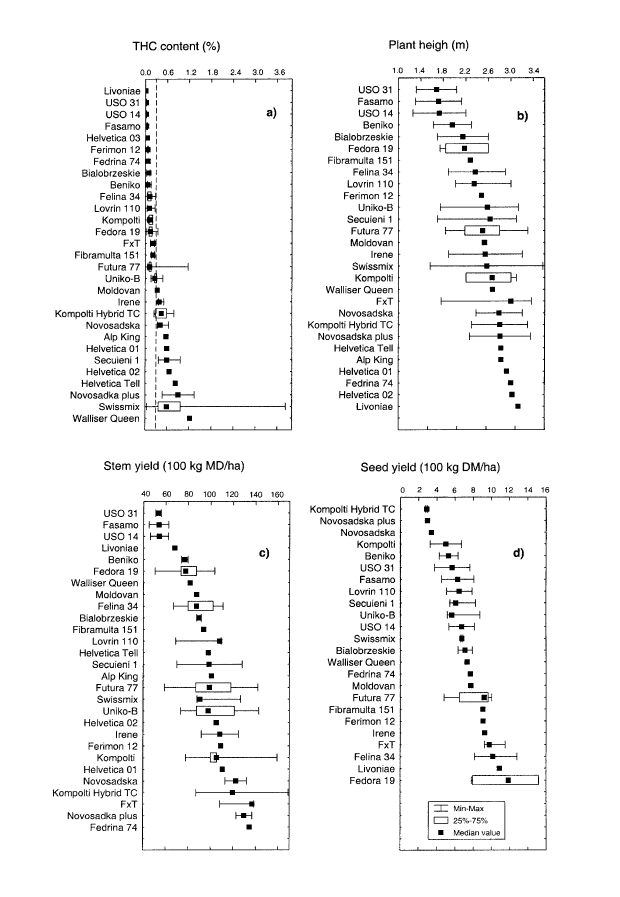
Figure 2. THC content (a), plant height (b), stem yield (c)
and seed yield (d) of different hemp genotypes. Trials 1993-1998
THC and other cannabinoids
Cannabinoids are a group of secondary compounds (terpenolic phenols), which are found only in Cannabis. They are localised mainly in the perigonal bracts of female inflorescences. Only Δ9-tetrahydrocannabinol (THC) seems to have significant psychoactive activity. The THC content in the inflorescences of our specimens was analysed according to the method valid in the European Union (Anonymous 1998, modified according De Meijer et al. 1992, as well as Mediavilla and Brenneisen 1996) and was expressed in percent drug present relative to the dry matter. Investigations in Switzerland showed that the THC content is mainly determined genetically and that the cultivation altitude does not have significant influence (Mediavilla and Brenneisen 1996).
Results of the THC analyses are similar to those available references (e.g., De Meijer et al. 1992). In Swissmix and in several other genotypes, the THC content was clearly higher than the threshold value of the 0.3% valid in the European Union and in Switzerland for industrial hemp (Fig. 2a). On the basis of these results, new low THC varieties were registered in the Swiss variety catalogue, as contributions to hemp cultivation.
Numerous references state that resistance against insects, fungi, bacteria and nematodes and also fibre quality and the crop husbandry depend on the THC content of a hemp population (e.g., Pate 1994, Rabara 1999). This hypothesis has yet to be confirmed (De Meijer 1993, McPartland 1997). We have found that drug strains - which are not adapted to Swiss conditions - are more susceptible to several diseases. It is well-known that Swissmix is very susceptible to Botrytis cinerea when cultivated outdoors. Our past experience showed that plant THC content does not have agronomic importance. McPartland (1997) assumes that disease resistance or robustness of hemp is based on a multiplicity of other compounds, and that the cannabinoids play only a minor role.
* Mechanical decortication
measured according to Keller 1999 (personal communication). Higher numbers
indicate easier decortication.
|
||||||||||||||||||||||||||||||||||||||||||||||||||||||||||||||||||||||||||||||||||||||||||||||||||||||||||||||||||||||||||||||||||||||||||||||||||||||||||||||||||||||||||||||||||||||||||||||||||||||||||||||||||||||||||||||||||||||||||||||||||||||||||
Fibre production
Traditional breeding in Eastern Europe and France always emphasised fibre production (De Meijer 1995). Cultivars which have a high stem yield, a high bark and fibre content as well as a low stem diameter are generally desirable for this purpose. Additionally, a good decorticability (mechanical separation of the bark from the stem) and a low content of fibre cement substances (so-called "gums", such as lignin, pectin and hemicellulose) are favourable.
In our experiments, the highest stem yields were approximately 13 tons dry matter (DM) per hectare. Late ripening varieties such as 'Kompolti' and 'Fedrina 74' showed a higher stem yield than early ripening varieties like 'USO 14', 'USO 31' and 'Fasamo' (Fig. 2c). The highest fibre and bark contents were measured with Hungarian, Polish, Ukrainian and Yugoslav varieties. Strains originating from Switzerland had a very low bark content (Table 3). The content of fibre cement substances was unclear and varied depending on the cultivar. 'Felina 34' had, for example, a low content of pectin and hemicellulose, but a high lignin content. 'Beniko' has a very low lignin content, but relatively highly pectin and hemicellulose contents. The stem diameter correlated negatively with maturation, late ripening cultivars having thicker stems. This may represent a certain disadvantage for fibre production. 'Fasamo', 'Futura 77' and 'USO 31' were not suited to mechanical decortication (Table 3).
* Result of smell tests. 100% best, 50% average, 0% very bad |
||||||||||||||||||||||||||||||||||||||||||||||||||||||||||||||||||||||||||||||||||||||||||||||||||||||||||||||||||||||||||||||||||||||||||||||||||||||||||||||||||||||||||||||||||||||||||||||||||||||||||||||||||||||||||||||||||||||||||||||||||||||||||||||||||||||||||||||||||||||||||||||||||||||||||||||||||||||||||||||||||||||||||||||||||||||||||||||||||||||||||||||||||||||||||||||||||||||||
Suitability for the food industry
Hemp seeds are a valuable source of unsaturated fatty acids for human nutrition (Deferne and Pate 1996, Mediavilla et al. 1997). For this use, a high grain yield is desired. At the same time, a low crop height is decisive, because of easier threshing (Bassetti et al. 1998). In our regions, earliness is essential with respect to bird damage. All these characteristics were observed, in particular, on monoecious and early maturing cultivars (Table 2, Fig. 2b). The grain quality characteristics (fat, protein content and fatty acid composition) of different genotypes are represented in Table 4. Seed oil output is important and was higher for early maturing cultivars (between 30 and 36%). The content of gamma-linolenic acid (GLA) was best with the 'USO 14', 'USO 31', 'Fasamo', 'Beniko', 'Felina 34' and 'Fedora 19'. Swiss strains had a lower GLA and a higher alpha-linolenic acid content.
Essential oil of hemp is produced by steam distillation of the inflorescences (Meier and Mediavilla 1997). This essence is used as a taste carrier in some foods (e.g., for beverages and sweets) and cosmetics. The smell quality is more important than the extracted quantity. In our tests, it could be shown that the essential oil produced from 'Felina 34', 'Futura 77', 'Kompolti', 'Kompolti Hybrid TC', Moldovan and 'Bialobrzeskie' was particularly good smelling (Table 4). We suppose that these cultivars would be probably also profitable for the production of hemp beverages (e.g., tea), if they have a low THC content (Fig. 2a).
Conclusion
Hemp varieties differ in their agronomic characteristics and psychoactivity. Important traits include yield and the quality of stems, fibres, grains, GLA and essential oil (Table 2).
The number of varieties suitable for the cultivation is, despite the large number of tested strains, low. Many factors limit the choice in Switzerland. Further restrictions result from the drug law and food regulations. Hemp cultivation in countries recently cultivating hemp (e.g., Canada or Italy) have led to a shortage of available seed. Protectionism by certain breeding organisations can further limit seed production and the commerce. The EU is intending from the year 2001 to allow only varieties with a THC content lower than 0.2%. The effect of these regulations for Switzerland is still open. [Editor's note: See the Letters section concerning EU regulations.]
References
Anonymous 1943. Eidgenössische Landwirtschaftliche Versuchsanstalt Zürich-Oerlikon und Vereinigung "Flachs und Hanf". Anleitung für den Anbau von Flachs und Hanf. [Guidance for the cultivation of flax and hemp] Die Grüne, 1-8. [in German]
Anonymous 1998. Oft wird behauptet, die Resistenz der Hanfpflanzen gegenüber Insekten, Nematoden, Pilzen, Bakterien und anderen Pflanzen sei auf das THC zurückzuführen. Mehrere Arbeiten haben aber gezeigt, dass dies nicht der Fall ist. Erfahrungsgemäss leiden beispielsweise Drogensorten, die nicht an unsere Bedingungen angepasst sind, wenn sie auf dem Feld angebaut werden, unter Krankheiten.
Bassetti, P., V. Mediavilla, E. Spiess, H. Ammann, H. Strasser and E. Mosimann 1998. Hanfanbau in der Schweiz - Geschichte, aktuelle Situation, Sorten, Anbau- und Erntetechnik, wirtschaftliche Aspekte und Perspektiven. [Cultivation of hemp in Switzerland - history, current situation, varieties, cultivation and harvest technique, economic aspects and perspectives.] FAT-Berichte, 516. [in German and French]
Bonin, G., 1994. Hanf Dampf auf allen Äckern. [Hemp steam on all the fields]. Cash. 22:87. [in German]
Bòcsa, I. and M. Karus 1997. Der Hanfanbau - Botanik, Sorten, Anbau und Ernte. [Hemp cultivation - botany, varieties and harvest.] C.F. Müller Verlag, Heidelberg. [in German]
Deferne, J. L. and D. W. Pate 1996. Hemp seed oil: a source of valuable essential fatty acids. Journal of the International Hemp Association 3(1):1-7.
De Meijer, E. P. M., H. J. Van der Kamp and F. A. Van Eeuwijk 1992. Characterisation of Cannabis accessions with regard to cannabinoid content in relation to other plant characters. Euphytica 62:187-200.
De Meijer, E. P. M. 1993. Evaluation and verification of resistance to Meloidogyne hapla chitwood in a Cannabis germaplasm collection. Euphytica 71:49-56.
De Meijer, E. P. M. 1995. Fibre hemp cultivars: A survey of origin, ancestry, availability and brief agronomic characteristics. Journal of the International Hemp Association 2 (2):66-76.
Leupin, M. 1996. Bakterielle Degummierung von Ramie (Boehmeria nivea): I. Erfassung und Beurteilung der Faserqualität, II. Degummierung mit Faserbakterien. [Bacterial degumming of Ramie (Boehmeria nivea): I. Registration and evaluation of the fibre quality, II. Degumming with fibre bacteria.] Doctoral thesis, Swiss Federal Institute of Technology, Zurich, Switzerland, 11 893. [in German]
McPartland, J. M. 1997. Cannabis as a repellent and pesticide. Journal of the International Hemp Association 4 (2):89-94.
Mediavilla, V. and R. Brenneisen 1996. THC-Gehalt von Industriehanf-Sorten. [THC content of industrial hemp varieties.] Mitt Ges. Pflanzenbauwiss. 9:243-244. [in German]
Mediavilla, V., R. Derungs, A. Känzig and A. Mägert 1997. Qualität von Hanfsamenöl aus der Schweiz. [Quality of Swiss hemp seed oil.] Agrarforschung 4 (11-12):445-451. [in German]
Mediavilla, V., M. Jonquera., I. Schmid-Slembrouck and A. Soldati 1998. Decimal code for growth stages of hemp (Cannabis sativa L.). Journal of the International Hemp Association 5 (2):65, 68-74.
Meier, Ch. and V. Mediavilla 1997. Factors influencing the yield and the quality of hemp (Cannabis sativa L.) essential oil. Journal of the International Hemp Association 5 (1):16-20.
Pate, D. W. 1994. Chemical ecology of Cannabis. Journal of the International Hemp Association 1 (2):29, 32-37.
Rabara, T. 1999. Die Industrie hört das Gras wachsen. [The industry hears the grass growing.] Cash 10:3. [in German]
|
|
|
|